The Living Ledger Beneath Our Feet
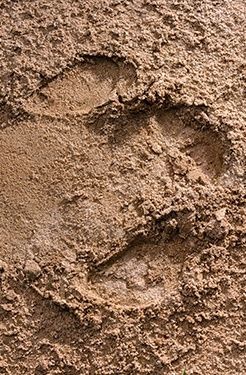
Long before GPS collars, camera traps, and aircraft surveys became part of wildlife protection, experienced trackers learned to read the ground as a record of animal life. A rhino leaves more than a footprint. It leaves a sequence of impressions, scuffed soil, bent vegetation, dung, urine, scrape marks, and altered pathways that can reveal where it has travelled and how it has moved. Today, this traditional knowledge works alongside modern tools rather than competing with them. A satellite location can show where an animal is, while spoor can help explain what happened along the route and whether the animal appeared calm, injured, displaced, or under pressure.
The value of spoor tracking lies partly in its restraint. Following signs on the ground does not require capturing an animal, attaching equipment, or approaching closely enough to alter its behavior. That matters because pursuit, immobilization, and repeated human contact can produce physiological stress, particularly in large mammals already facing habitat fragmentation, drought, conflict, and poaching pressure. By studying the physical clues left behind, rangers can reconstruct activity while preserving the animal’s distance and freedom. The method requires patience and disciplined observation, including attention to print shape, soil compression, stride rhythm, dung, vegetation, and the age of each sign.
Anatomy of a Print Distinguishing Species and Demographics
At first glance, both white rhino and black rhino tracks appear as broad, three-toed impressions. Careful examination reveals useful differences. Black rhino tracks generally have a broad central toe with smaller outer toes set farther apart. A front print measures about 24 centimetres and a hind print about 23 centimetres in the field guidance summarized by EcoTraining. The heel indentation is comparatively shallow, and the sole creases are often less pronounced. These features are most reliable when the impression is fresh and has not been distorted by rain, wind, loose sand, or the animal stepping partly on an older mark.
White rhino tracks are typically larger, measuring approximately 29 centimetres at the front and 28 centimetres at the hind foot. Their outer toes sit closer to the dominant middle toe, and the heel may show two distinct lobes. Block-shaped creases in the sole can be particularly valuable because their arrangement may help distinguish one individual from another. White rhinos may also walk with the feet slightly turned outward, creating a characteristic pattern when several consecutive prints are examined together. Species identification should never depend on a single feature. Trackers compare size, toe spacing, heel form, gait, dung, browsing evidence, and the surrounding habitat.
| Feature | Black rhino | White rhino |
|---|---|---|
| Typical front track | About 24 cm | About 29 cm |
| Typical hind track | About 23 cm | About 28 cm |
| Toe arrangement | Central toe broad, outer toes farther apart | Outer toes closer to the central toe |
| Heel and sole | Shallow heel, less prominent creases | Two-lobed heel, sometimes block-shaped sole creases |
Measurements can also suggest demographic differences, although they should be treated as estimates rather than definitive labels. A larger, deeper print may indicate a mature, heavier animal, while a smaller impression may belong to a young rhino. Depth is influenced by body mass but also by soil moisture, slope, speed, and the angle at which the foot landed. Sex is especially difficult to determine from a print alone. Experienced trackers therefore build a profile from repeated spoor, dung characteristics, territorial behavior, known ranges, and sightings when available. Research on individual identification demonstrates the potential of this approach: a study of black rhinos in Hwange National Park used landmark measurements from left hind footprints and achieved high assignment accuracy under controlled conditions, while also showing why fresh, undistorted impressions and reference libraries are essential. Broader wildlife tracking research similarly illustrates how fine anatomical variation becomes meaningful when supported by systematic field data.
Decoding Territorial Signals and Dung Scrapes at Middens
A communal midden is not simply a pile of dung. It is a recurring social station, often positioned near pathways, water sources, or territory boundaries, where rhinos deposit and encounter chemical information. The odor of dung can communicate aspects of an animal’s identity, including sex, age, reproductive condition, and territorial status. Repeated visits create a layered record. A tracker may assess whether the midden is active, which directions animals approach from, whether fresh dung has been disturbed, and whether the surrounding soil carries recent scrape marks.
Territorial white rhino bulls may kick dung across a midden with considerable force. This behavior spreads fecal material and temporarily increases the strength of its odor, creating a conspicuous short-term signal for rivals and potential mates. The increased signal does not last indefinitely, which helps explain why timing matters. A bull that deposits or scatters dung before periods of high midden visitation may gain more value from the intense initial odor than from a weaker signal that persists for longer. Behavioral analysis of this cost and benefit is described in research on territorial dung kicking.
Rangers read the physical aftermath with caution. Long winding marks may indicate a dominant bull scraping dung, while paired drag marks, urine, and disturbed soil can add context to a territorial scrape. Depth and freshness matter, but neither should be interpreted in isolation. A shallow mark in dry sand may represent vigorous movement that lost definition, whereas a deep mark in damp soil may have been made by a lighter animal. Useful observations include:
- The direction and length of scrape marks around the midden
- Whether dung is intact, scattered, or recently overlaid
- Fresh footprints approaching, leaving, or circling the site
- Signs of repeated use along a boundary or travel corridor
- Vegetation disturbance and the likely age of each sign
Patterns across several visits are more informative than a single dramatic scrape. A midden that receives fresh deposits and repeated kicking may indicate continued occupancy, while a formerly active site that becomes weathered and undisturbed may suggest a boundary shift, displacement, seasonal movement, or a change in water and forage availability. These interpretations must remain provisional until supported by additional spoor, community reports, camera evidence, or telemetry.
Gait Mechanics and Subtle Indicators of Stress or Injury
A rhino’s movement leaves a rhythm on the ground. Regular spacing, consistent depth, and clean placement generally indicate steady travel, while shortened strides, irregular overlap, toe dragging, or sudden changes in direction may signal pain, fatigue, fear, or difficult terrain. Asymmetrical weight distribution is especially important. If one limb is painful, the animal may place less weight on that side, producing a shallower impression, a shortened step, or a compensating change in the opposite limb’s track. Dragging can also appear when an animal is tired or moving cautiously through thick vegetation.
Human disturbance can alter gait without causing a physical injury. A rhino that detects people, vehicles, dogs, or unfamiliar noise may accelerate, turn sharply, leave a well-used route, or enter denser cover. Rapid movement displaces more soil and may lengthen the distance between prints, but fear responses vary with terrain and the animal’s previous experience. Rangers therefore assess wind direction, visibility, pressure zones, vehicle access, and the likelihood that the animal was aware of pursuit. A report from north-west Namibia demonstrated the value of skilled field tracking and local coordination when strong winds threatened to erase the spoor of two young black rhinos that had moved toward a human settlement.
When irregular movement is detected, a careful assessment may follow this sequence:
- Record the location, substrate, weather, wind, and estimated age of the spoor before entering the track line.
- Compare several consecutive prints from both sides rather than judging one impression.
- Measure stride, track width, print depth, toe drag, and any consistent asymmetry.
- Look for associated blood, hair, overturned vegetation, limping paths, or signs of conflict, while avoiding unnecessary pursuit.
- Withdraw if the animal is nearby, stressed, or moving toward people, then alert the appropriate monitoring or veterinary team.
- Compare the findings with camera images, known individual records, radio data, or GPS information where available.
This method protects both the animal and the people conducting the assessment. Tracking is not permission to close distance. A competent ranger knows when the best intervention is to preserve the trail, share coordinates, and allow a specialist team to decide whether further action is justified.
Blending Indigenous Science with Modern Wildlife Protection
Traditional trackers contribute much more than a practical ability to find animals. Their knowledge often includes seasonal changes in soil, wind behavior, plant disturbance, animal temperament, water movement, and the social geography of a landscape. When paired with scientific patrols, that knowledge can improve species identification, individual monitoring, and operational safety. Field training programs in South Africa have combined dangerous-game tracking, terrain assessment, radio telemetry, and approaches on foot, showing how physical spoor and electronic signals can strengthen one another.
Modern technology remains valuable, particularly across large reserves where an animal can move beyond routine patrol routes. GPS pods can provide frequent location data about home ranges, boundary crossings, habitat use, and possible distress, although attachment reliability, network coverage, lifespan, and cost remain practical limitations. Spoor provides a different kind of resolution. It can show how an animal used a narrow passage, whether it hesitated, what it encountered, and whether its movement appeared mechanically normal. Together, these tools reduce the pressure to capture animals solely for routine information gathering.
- Trackers identify species, individuals, movement direction, and recent behavioral changes.
- Scientists record measurements, build reference libraries, and test interpretations against known animals.
- Remote sensing reveals wider patterns across home ranges and inaccessible terrain.
- Rangers use the combined evidence to prioritize patrols, respond to threats, and protect sensitive habitat.
This partnership also has an ethical dimension. Indigenous and local expertise should be recognized as professional conservation knowledge, not treated as an informal substitute for science. Effective programs provide training, fair compensation, safety equipment, decision-making authority, and opportunities for experienced trackers to mentor new practitioners. Conservation becomes stronger when technological innovation respects the people who understand the landscape at ground level.
Safeguarding the Future One Footprint at a Time
Ancient spoor tracking remains vital because it answers questions that technology alone cannot. A footprint can identify a species, suggest an age class, record a gait, reveal a territorial boundary, and indicate whether an animal has recently passed through a vulnerable corridor. Dung middens can preserve a social conversation in scent, while scrape marks and disturbed soil can show how territorial behavior shapes space. None of these clues is infallible, but careful repetition and comparison turn individual observations into a dependable conservation record.
The future of rhino protection will depend on combining respectful observation with rigorous science. Support for trained local and Indigenous rangers, properly designed monitoring programs, habitat restoration, community partnerships, and responsible tourism all help reduce pressure on wild populations. Visitors can contribute by keeping distance, following sanctuary and reserve rules, never seeking close encounters, and supporting conservation organizations that demonstrate transparent animal-welfare and community commitments. Beneath every rhino trail lies information, but also a responsibility: to read the ground without disturbing the life that made the mark.
